Synchronizing carburettors without tools
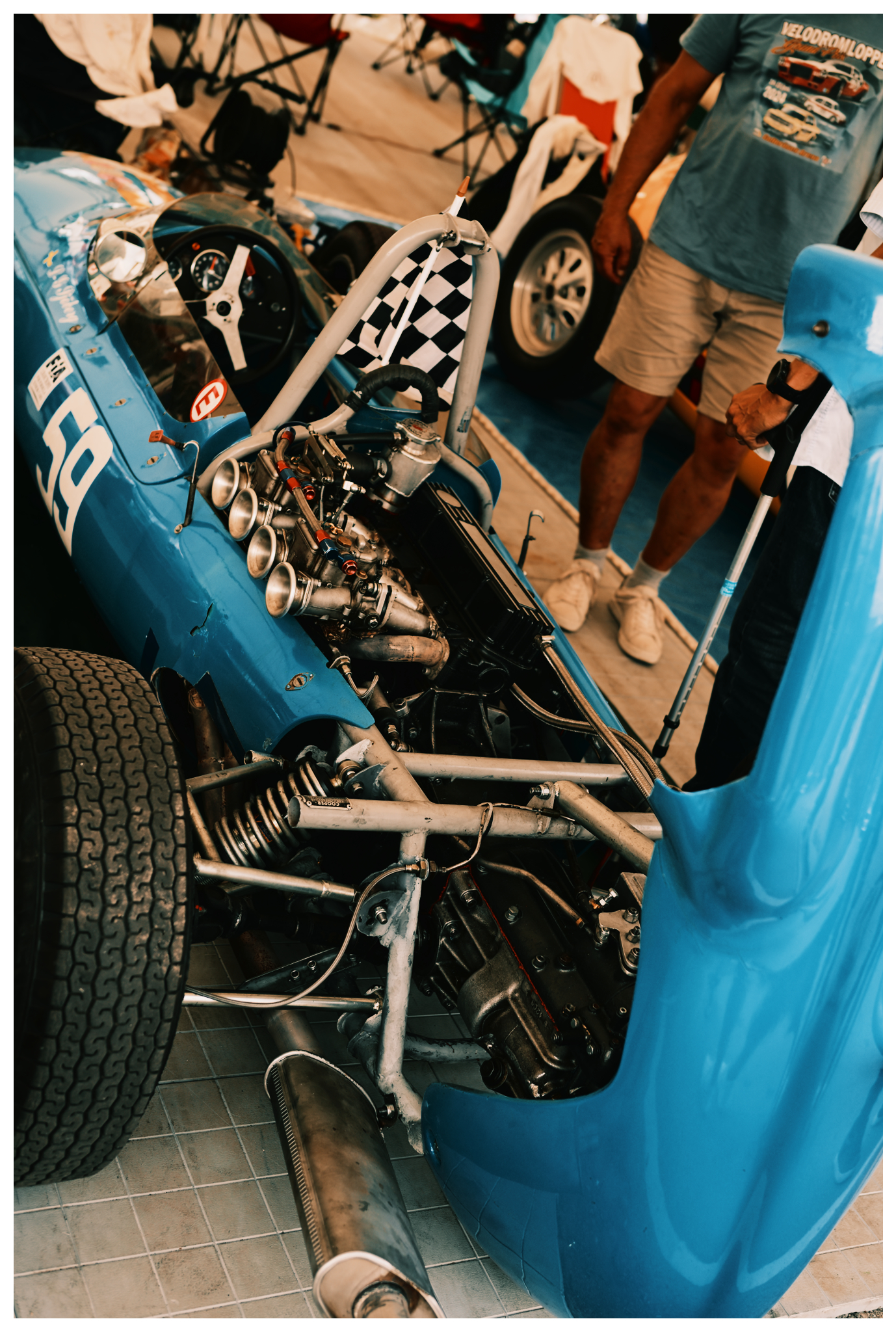
My first car, with licens plates, was a 1976 Opel Kadett C Coupé with a trick 2,5 liter CIH engine and double 48 mm Weber carburettors. I got a number for a guy who lived 20 minutes drive from me who could adjust those carburettors. So whenever I had re-installed the carbs or had driven for a long time I called him and went by to see him.
I always arrived with a very lumpy idle.
This guy was proper old school. Walking out of his driveway with just a screwdriver in hand he smiled and could of course hear from a mile away that the carbs needed synching. Then I would watch him for a few minutes turning screws in and out on the carburettors all the while very intently listening to the engine. I did not really understand anything apart from the fact that I knew they were out of sync and I knew somewhat about the idle being high or low. But watching him work and listening to the engine gradually “calming down” until it in the end would idle almost perfectly still. At least perfectly still for a very modified high output engine was like seeing a magician at work.
I cannot remember if I ever really questioned him about how he did what he did or how I could learn, but life happened and I bought synchronization tools and suddenly did not need his expertise anymore.
But I never forgot the magic of seeing him do that and I always wanted one day to be a guy who could do that.
Over the years I go from modifying and racing cars to motorcycles as they require less room to play with. Always really enjoying working on carburettors and love reading the theory and bringing my skills to the next level.
I had gradually found out how to do the idle mixture by ear but never really “cracked” the code for doing synchronization by ear.
Then recently one of the guys from the garage where I have my bikes needed some help with an old Ukrainian sidecar motorcycle. The engine layout is like a BMW with cylinders sticking out vertically to each side. It had not been running for a long time and he just got it started, but it ran horribly. It did not have any vacuum studs, so I could not use my vacuum tool and as we just wanted a quick baseline we did not remove the airfilters where I may have been able to insert my vacuum gauge that goes in the throat of the carburettor.
So I just wanted to baseline the idle mixture screws.
But then a light bulb went on in my head. I suddenly understood what the “magician” had done when he synchronized my Weber carburettors by ear.
I never understood why he kept going back to the idle mixture screws over and over again - but that was exactly what I understood at that moment. The idle mixture screws are used a gage for whether that carb is running at the same speed as the other(s).
So on a two cylinder bike you do the following:
- Try on either carb to do half a turn in and half a out of the idle mixture screw. One will make a bigger change of engine note that the other. Adjust this idle mixture screw until it gives the highest idle. This carburettor is “leading” meaning that it is running at a higher idle than the other.
- Adjust the idle slightly higher on the other carburettor. If the idle goes too high like 1500 or above, then adjust the idle on the “leading” carburettor slightly down.
- Adjust the idle mixture screw on the “follower” carburettor to where the idle is highest. If there are no changes to be heard from adjusting the idle mixture then increase the idle of this carb a little more and try again.
- Once you can hear a difference from adjusting the idle mixture screw on this carb, you are ready to do the fine-adjustments.
- Now you go back and forth between either carburettor and try and turn the idle mixture screw half a turn in and half a turn out and back. Each time listening very carefully to the engine. You really have to listen. And some may not be able to hear it - my friend could not hear a difference, so really pay attention.
- The carburettor that makes the biggest change to the idle is the one leading - this can change if you “over-shoot” - and it is perfectly fine. If it changes then either bring the idle down on the one leading or up on the one following depending on how high the idle is.
- The end goal is to have either carburettor give the same change of idle from half a turn in and half a turn out of the idle mixture screw. When you reach that point, then the carburettors will be synchonized.
All of this of course requires the carburettors to be in full working order. If there is a leak somewhere or the carburettors are either not clean or functioning properly, then this will never work.
But with functioning carburettors this will work.
One you go to four cylinder engines with individual carbs then this will be a lot more complicated and take more time. But the principle is the same.
I would of course always recommend using actual synchronization tools as it is a lot easier, but if you end up in a position where you do not have them or want to impress your mates, then this is a very nice trick to have up your sleeve.